
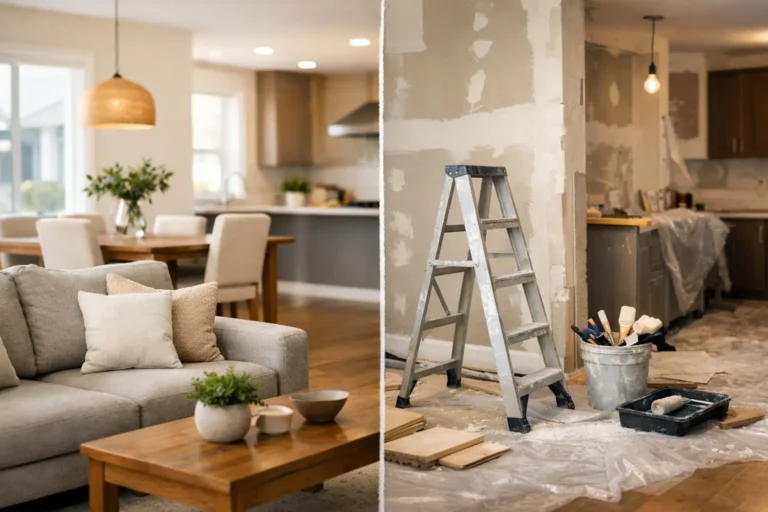
A half-finished kitchen, bare plasterboard or a bathroom waiting on its final fixtures can make selling feel like a choice between two expensive paths. Should you finish renovating before selling? Sometimes, yes. But completing every planned improvement is not automatically the best way to protect your sale price, particularly when time, cash flow or personal circumstances are already under pressure.
For many Melbourne and Victorian owners, the smarter question is not, “What would make this home perfect?” It is, “What work will make the property easier to sell and more appealing to the right buyers?” That distinction can prevent a stressful renovation from becoming an even more stressful holding period.
Should you finish renovating before selling? Start with the buyer
The right decision depends on who is most likely to buy your property. A family looking for a move-in-ready home will assess unfinished work very differently from a builder, investor or owner-occupier seeking a project. The location, price bracket, land value and condition of nearby sales all matter.
In a tightly held suburb where buyers expect polished homes, visible incomplete work can narrow the buyer pool. Buyers may assume the remaining work is more complicated than it appears, budget for a contingency, then discount their offer accordingly. An unfinished renovation can also make it harder for buyers to picture themselves living in the home.
By contrast, a dated weatherboard home on a strong block, a deceased estate, or a property in an area popular with renovators may attract buyers precisely because it offers potential. Spending heavily to bring it to a standard beyond comparable local sales may not be reflected in the final result.
The goal is to understand the gap between the property’s current state and what the market expects. That takes a realistic view of recent comparable sales, not a renovation wish list.
Separate essential completion from cosmetic ambition
Not all unfinished work carries the same weight. Buyers can generally look past an older vanity or dated tiles if the home feels sound, clean and functional. They are less comfortable with signs that create uncertainty around safety, compliance, water damage or liveability.
Work that is often worth completing
Finishing work may be sensible where it removes a clear obstacle to inspection, finance or buyer confidence. This can include repairing active leaks, addressing unsafe electrical issues, making bathrooms and kitchens operational, securing loose balustrades, completing essential waterproofing, or resolving obvious damage caused by an incomplete project.
Presentation also matters. A thorough clean, rubbish removal, garden tidy-up, fresh neutral paint where appropriate, repaired doors and functional lighting can materially change a buyer’s first impression without turning the sale into a full renovation project. These are not glamorous upgrades, but they help buyers focus on the home rather than a list of immediate jobs.
Work that may not return its full cost
High-end finishes, extensive landscaping, moving walls, bespoke cabinetry and major layout changes are more speculative. They can be worthwhile when they are carefully planned around local demand, but they are rarely the right response to an urgent sale, mortgage pressure or a property that simply needs to be presentable.
Avoid choosing finishes based only on personal taste. A bold tile, premium appliance package or elaborate feature wall may suit one buyer and put off another. If the home is likely to be renovated again by its next owner, that spending can be particularly difficult to recover.
The hidden cost is time, not just the renovation budget
Owners often compare renovation cost with a hoped-for increase in sale price. That is necessary, but it is only part of the calculation. Every extra month spent planning, approving, completing and rectifying works adds holding costs and uncertainty.
There may be mortgage repayments, council rates, insurance, utilities and strata levies. A vacant property can require regular checks and may be more vulnerable to maintenance issues. If you are relocating, managing an estate, separating finances after a divorce, or trying to resolve a problem tenancy, delay can have an emotional cost as well.
Construction schedules can shift. Trades may not be available when expected, materials can be delayed, and discoveries behind walls or under floors can change the scope. Even a modest refresh needs coordination, decisions and quality control. Before committing, consider whether you have the time, funds and capacity to manage those moving parts.
A renovation should improve your selling position, not leave you exposed to a project that is too costly or too slow to finish.
Get clear on the numbers before work begins
A practical assessment starts with three potential sale scenarios: selling as is, completing essential works and completing a broader renovation. Each scenario should include likely sale range, project costs, selling costs, holding costs and the time required to reach market.
The important figure is the likely net outcome, not the highest possible headline price. A renovated property may sell for more, yet still leave less after construction costs and months of holding expenses. Conversely, modest completion works can make the property feel complete enough to broaden buyer interest and reduce the discount buyers apply for inconvenience.
It is also wise to allow for contingency. Older homes commonly reveal surprises once work begins, especially around plumbing, wiring, moisture, subfloors and previous alterations. If the project only makes sense when every estimate is exact, it may be too finely balanced.
For unfinished renovations, document what has been done. Keep invoices, approvals, warranties, product details and relevant certificates organised. Clear information gives buyers and their advisers a better basis to assess the home. Missing paperwork does not always stop a sale, but uncertainty can affect confidence and negotiations.
When selling as is can be the stronger option
Selling as is is not the same as giving up on value. It can be a deliberate strategy when speed, certainty and simplicity matter more than extracting every possible dollar through a renovation.
This pathway may suit an inherited property where beneficiaries do not want to manage works, an owner facing financial strain, someone who has already started but cannot complete a renovation, or a landlord dealing with a difficult property after tenants leave. It can also make sense where the home’s value is driven mainly by its land, location or redevelopment potential.
The key is to price and position the property honestly for its condition. A buyer willing to take on the work will factor in risk, effort and cost. In return, the seller avoids the need to fund and oversee a project before moving forward.
There is also a middle ground. Rather than undertaking a full renovation, owners may complete only the work needed to make the property safe, tidy and inspectable, then sell with its future potential clearly understood. This often creates a more manageable path than either extreme.
Avoid the trap of finishing someone else’s project
One of the most common mistakes is trying to complete a home to an imagined buyer’s preferences. The last 10 per cent of a renovation can consume far more than 10 per cent of the budget, especially when it involves joinery, fixtures, landscaping and final defects.
If the core work is complete, buyers may be comfortable choosing the finishing touches themselves. If the home is still fundamentally unliveable, the equation changes. The decision comes down to whether the remaining work removes a major barrier or simply improves an already adequate result.
An independent, property-specific assessment can help distinguish between the two. It should account for local buyer demand, the condition of the home, realistic renovation scope and your preferred timing, rather than assuming that more work always means more value.
A clearer way to choose your next step
You do not need to decide between a perfect renovation and an immediate sale without exploring the options. A practical plan may involve selling as is, completing targeted repairs, or arranging a managed renovation designed around the property’s likely market outcome.
The best pathway is the one that fits both the property and your circumstances. If completing the work will create a sale-ready home within a sensible timeframe and budget, it may be worthwhile. If it adds pressure, delays your next move or risks overcapitalising, a simpler exit may be the better result.
Uplift Property Solutions helps owners assess practical selling and value-maximisation options for properties that need work, are unfinished or are difficult to prepare for market. If you are weighing up your next move, contact Uplift Property Solutions for a calm, straightforward conversation about the pathways available.