
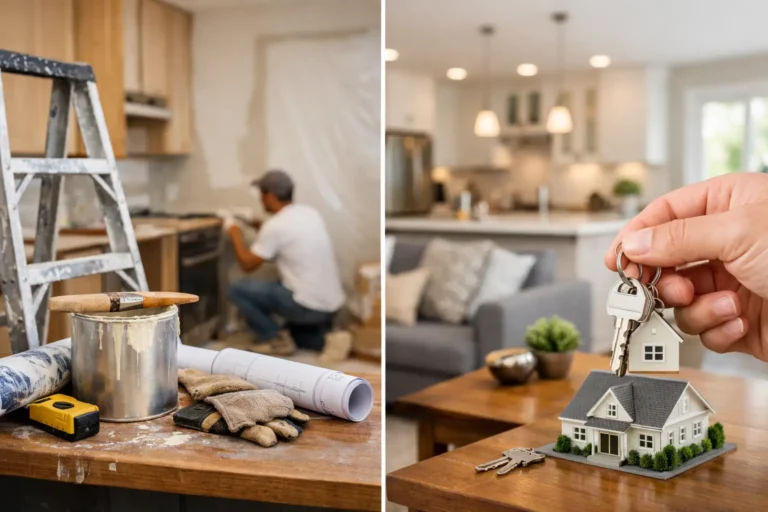
A tired kitchen, peeling paint and an overgrown yard can make any owner pause and ask, should I renovate before selling? It is a fair question, especially when the property already feels like a source of stress. For many Victorian owners, the answer is not a simple yes or no. It comes down to the likely uplift in sale price, the time available, the condition of the home and how much risk you are willing to carry before the sale.
If you are selling a well-kept home in a steady market, a light refresh may be enough. If the property has serious defects, unfinished works, tenant damage or years of deferred maintenance, a larger renovation can become expensive very quickly. In some cases, renovating improves the final result. In others, it just delays the next step and adds more pressure.
Should I renovate before selling or sell as is?
The best way to think about this is to separate cosmetic improvement from major renovation. Cosmetic work is usually lower risk. Fresh paint, basic landscaping, decluttering, replacing tired fittings and fixing obvious damage can help buyers feel more comfortable from the moment they walk in. These jobs tend to improve presentation without forcing you into a long project.
A major renovation is different. Replacing a kitchen, redoing bathrooms, rectifying structural issues or finishing an incomplete extension can absorb significant time and money. It also introduces uncertainty. Quotes can change, trades can be delayed, and what looks simple at the start can uncover waterproofing, electrical or compliance issues once work begins.
That is why the right question is not simply should I renovate before selling, but what level of work has the strongest chance of improving the result without exposing me to unnecessary cost and delay.
When renovation makes sense
Renovation can be worthwhile when the property is fundamentally sound but clearly under-presented. Buyers in many Melbourne suburbs will pay more for a home that feels clean, well-maintained and easy to move into. They may still expect to make changes later, but they do not want to inherit a long list of immediate jobs.
This is especially true when the issues are visible and straightforward. Patch and paint work, replacing worn carpet, repairing broken doors or windows, improving lighting and tidying outdoor areas can all change the way a buyer perceives value. Presentation affects emotion, and emotion affects offers.
It can also make sense when there is a clear gap between the home’s current state and the standard of nearby comparable sales. If surrounding homes are neat, functional and market-ready, while yours appears neglected, there may be value in narrowing that gap. The aim is not to create the best home on the street. The aim is to remove avoidable objections and make the property easier to sell.
For deceased estates and inherited properties, this can be particularly relevant. Families often do not want to overcapitalise, but a modest refresh may help the property present respectfully and attract a wider pool of buyers. The same applies to long-held homes where maintenance has slipped over time.
When renovating before selling may not be worth it
Some owners are better served by selling without major works. If you are dealing with mortgage pressure, relocation, separation, problem tenants or a property that has already been difficult to manage, a renovation project may only add another layer of complexity.
Large-scale works are also harder to justify when the market is price-sensitive. If buyers in your area are cautious, the premium for a new kitchen or bathroom may not cover the full spend. This is a common trap. Owners renovate to achieve top dollar, only to find the market will not fully reward the improvements.
The same caution applies to properties with deeper issues. If there are structural concerns, non-compliant building works, drainage problems or major defects, the cost of rectification can be substantial. Even after spending the money, you may still be selling into a market that discounts for age, layout or location.
There is also the human factor. Renovating while preparing to sell can be exhausting. If the property is tied to a stressful life event, preserving energy and certainty may matter more than trying to extract every last dollar. A practical outcome is often better than a theoretical maximum that takes months to chase.
The middle ground often works best
For many sellers, the smartest path sits between a full renovation and doing nothing. A selective pre-sale improvement plan focuses only on items that buyers notice first and question most.
That usually means presentation, cleanliness, safety and functionality. A cracked tile, mouldy silicone, stained walls or a broken gate can create a bigger negative impression than owners expect. Small defects tend to make buyers wonder what else has been neglected. By contrast, a home that feels orderly and cared for can overcome dated finishes.
This middle-ground approach suits owners who want to improve saleability without taking on a full construction project. It can also be useful when the budget is limited or the sale timeline is tight.
What Melbourne and Victorian sellers should consider
In Victoria, local market conditions matter. Buyer expectations differ between inner Melbourne, growth corridors, established middle-ring suburbs and regional centres. In some areas, buyers are happy to renovate themselves if the location and land are strong. In others, they heavily favour homes that need little immediate work.
The style of housing matters too. A period home with original features may benefit from careful presentation rather than a generic modern update. An older brick veneer in a family suburb may respond well to practical improvements that make it feel brighter and more functional. An investor-grade property may need a different approach again, especially if rental wear and tear is obvious.
It is also worth considering compliance and handover risk. Unfinished renovations, unapproved works or visible maintenance issues can reduce buyer confidence and complicate the sale process. Sometimes the best commercial decision is to address those concerns. Sometimes it is better to disclose the condition clearly and price accordingly rather than start a project that cannot be completed efficiently.
A simple way to decide
Before spending anything, try to assess the property through three lenses: value, time and stress.
Value asks whether the proposed work is likely to lift the sale result by more than it costs, after allowing for holding expenses and project risk. Time asks whether you can realistically complete the work without dragging out the sale. Stress asks whether managing trades, decisions and unexpected issues is something you can cope with right now.
If the works score well on all three, renovation may be worth pursuing. If they only stack up on one, caution is sensible.
It also helps to distinguish between buyer-facing problems and owner-facing frustrations. Owners often focus on things they personally dislike, while buyers focus on immediate usability, obvious condition and perceived risk. A dated benchtop may matter less than damaged flooring, poor lighting or signs of water ingress.
Avoid overcapitalising on the wrong improvements
One of the biggest mistakes sellers make is renovating to personal taste. A pre-sale renovation should not be about creating a dream home. It should be about making the property broadly appealing and commercially sensible.
That usually means neutral finishes, practical repairs and restraint. Expensive custom joinery, premium appliances and highly specific design choices rarely deliver the same return in a sale campaign as owners hope. Buyers may appreciate the quality, but they do not always pay a full premium for it.
The safest improvements are often the least glamorous. Clean paintwork, working fixtures, tidy gardens, repaired damage and a fresh overall feel can do more for buyer confidence than a flashy renovation done at the top of the market.
If you are under pressure, options matter
Not every seller has the luxury of choosing the ideal timeline. Some need certainty more than they need a polished campaign. Others want to maximise value but cannot fund the works upfront or manage the process alone.
That is where tailored property solutions become important. Depending on the property and the owner’s circumstances, the right path might be a straightforward sale as is, a managed refresh before sale, or a broader strategy to improve presentation and buyer appeal without taking on unnecessary risk. The key is knowing that selling does not have to be one-size-fits-all.
For owners dealing with inherited homes, separation, financial strain or a property that is simply not market-ready, clear advice and practical execution can make the decision much easier. You do not need to guess whether every dollar spent will come back. You need a realistic plan based on the property, the local market and your situation.
If you are still weighing up should I renovate before selling, start with this: only do the work that has a clear purpose. Improve what buyers will notice, avoid upgrades that serve your taste more than the market, and be honest about your appetite for cost, delay and project risk. Uplift Property Solutions helps owners work through those choices with calm, practical support and a pathway that fits the property. If you want to explore your options, we are here to help.